For the teams responsible for sterile materials, the environment isn’t a detail — it’s the whole guarantee. Here is what changed when that environment stopped being a guess.
The conditions were critical. The visibility wasn’t.
- Temperature and humidity were captured by hand — a reading taken, a value written on paper.
- Because every check meant manual labour, they happened only now and then, never around the clock.
- Between checks, no one could see how the environment behaved — or whether it had drifted at all.
- If something changed overnight or over a weekend, there was no record and no signal to act on.
Nine sensors. Two environments that matter.
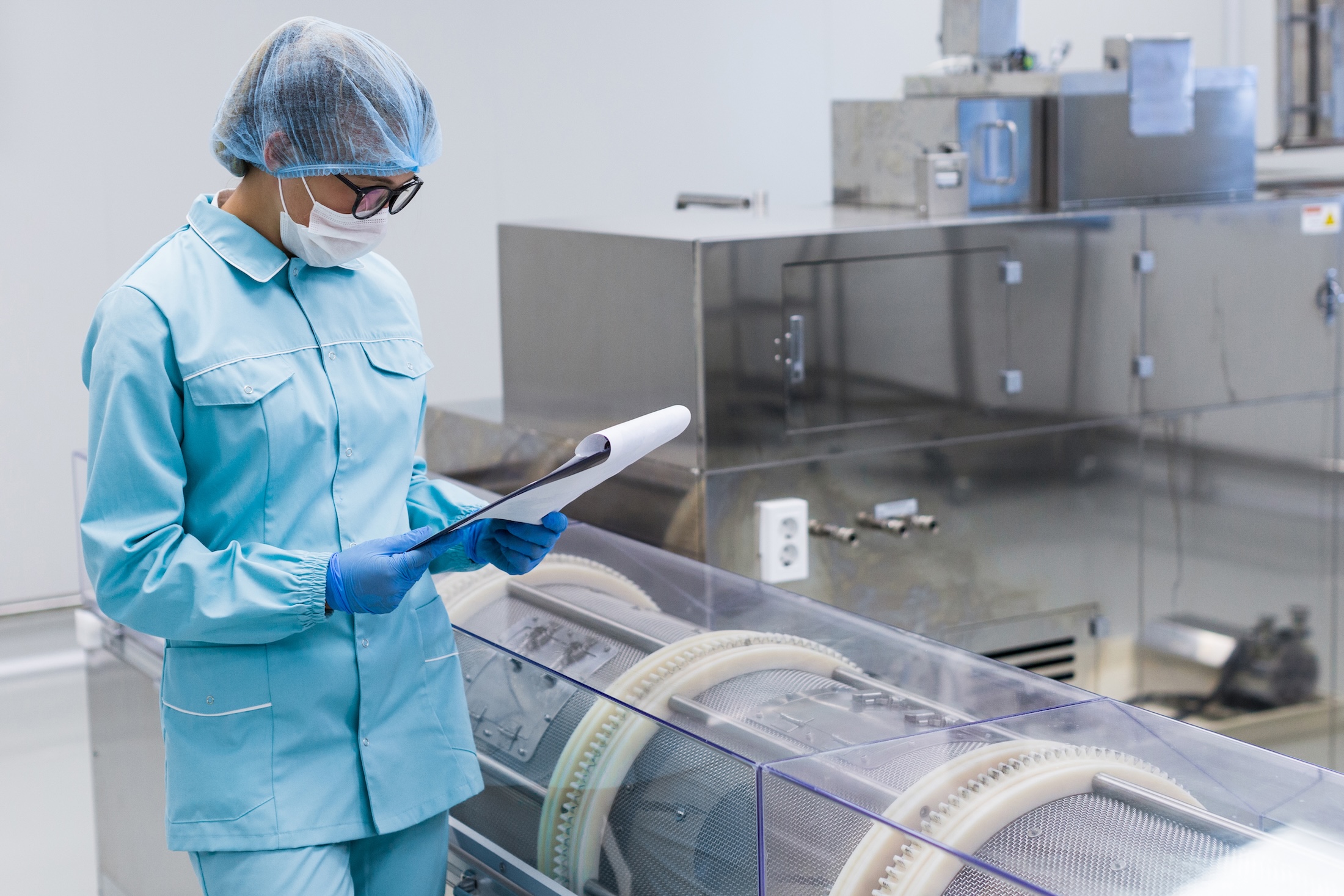
The department’s work spans two very different spaces — a quiet store and a busy production hall. Both now report continuously to the same place.
Sterile storage
The large store where all sterilised material is kept ready for use — the room whose conditions decide whether stock stays safe.
Production facility
The busy hall where the autoclaves run and sterilisation takes place, with staff working throughout the day and conditions in constant motion.
From occasional snapshots to a controlled environment.
No protocols were changed and nothing was overclaimed. What the department gained, first and foremost, was sight.
A controlled environment
The department now works from a known, monitored baseline instead of the occasional snapshot.
History you can look back on
Every hour is recorded, so conditions can be reviewed across days, weeks and months — not guessed at.
Breaches you can act on
If a threshold is crossed it is visible immediately, and can be followed up while it still matters.
Awareness where it counts
The team understands how the environment behaves around the critical materials they store and handle.